SUPERSTAR Rajinikanth – The Undisputed Emperor of Indian Cinema, Padayappa to Chandramukhi!


A ticket stub from Padayappa could tell you who owned the evening. Six years later, audiences bought tickets for his next big success and got a rather different proposition. The name above the door was Chandramukhi. The face they would have to watch most carefully was Jyothika’s.
That difference gets lost when Chandramukhi (2005) is remembered chiefly as Rajinikanth’s comeback after Baba. A comeback usually promises to give people their hero back. P. Vasu did that, right down to a fight, an introduction song, and a comedian with whom Rajini could happily waste an afternoon. But he also gave the audience a locked room and a woman whose story the hero did not own. How did that become the right Rajini film to make after Padayappa?
Why Padayappa looked like a place to stop
K. S. Ravikumar gave his hero a lifetime to play in one picture. When Padayappa opened on 10 April 1999, you could go in for the swagger of the young man who puts his hand into a snake hole and come out remembering the father of a grown daughter, paying a visit to a woman who has waited eighteen years to insult him. Rajini did not have to pass the baton to a younger actor. The younger actors had to figure out what to do about the unfinished business of his generation.
Look at who gets to make the decisions in that household. The father, played by Sivaji Ganesan, gives away the family property. The son can build a fortune but won’t choose a bride against his mother’s wishes. It is Lakshmi, as the mother, who understands both whom he loves and how the family was slighted when it lost its money. Her choice of Vasundhara, played by Soundarya, settles one debt and creates another. It gives Ramya Krishnan’s Neelambari something far more durable than a fight to lose: a grievance she can carry into the next generation.
That is why the famous swing still gets a laugh even when you know exactly where it is hidden. Neelambari has arranged a room in which she can sit and he must stand. For once, the logistics of a Rajini confrontation could fit on the back of a ticket: two people, one seat. He finds his own. Neither has to explain what has just happened to the balance of power. And it only works because Ramya makes you believe that this woman would remember a slight for eighteen years and prepare the furniture accordingly.
Ravikumar’s memory of making the scene is less grand than the scene itself. His original idea involved a concealed chair. At a location in Anna Nagar he spotted a swing, and the art department worked out how to hide it. Revisiting the film twenty years later, he also identified Neelambari’s distinctive Toyota Sera as his own car. Two of the things that seem most precisely designed for these characters began with what the director already had to hand.
There is something uncomfortable as well as pleasurable in this contest. The film gives Neelambari the more interesting appetite and then makes an example of her for having it. Vasundhara’s reserve is treated as a virtue; Neelambari’s refusal to be overlooked becomes a threat. You don’t have to agree with Padayappa’s pronouncements about how women should behave to recognise the skill with which Ramya holds the film together. Take her out of that drawing room and what is left? A man doing an elaborate trick to sit down.
A goodbye people discussed, not one he announced
Was retirement actually on the table? In December 1999, while preparing a celebration of her husband’s twenty-five years in cinema, Latha Rajinikanth was asked that very question. She described a man who wanted to take on less work and gradually withdraw from public life. Asked specifically whether Padayappa was his last film as a hero, she stopped well short of saying yes. Read what she said at the time and there is both a genuine wish to slow down and an open future. The idea of a farewell isn’t invented; the certainty was added later.
Another part of that conversation cuts closer to the films. Latha pointed out that a star of his size couldn’t simply pick parts to suit himself. Other people depended on the results. You can hear both sides of the problem in Padayappa. A man successful enough to stop is also the man whose next film a theatre owner would very much like to book. Take longer between films and an ordinary career decision can start looking like a referendum on whether there will be a next one at all.
The success travelled. Telugu audiences knew the dubbed version as Narasimha, not as a separate remake. Back in Tamil Nadu, a silver-jubilee celebration was already part of the conversation by December. Those are sturdier pieces of its box-office history than the neat profit calculation often attached to the film now. In 2025, India Today cited roughly ₹40 crore, without specifying the territory; The Times of India relayed a ₹63 crore worldwide estimate. Neither is a 1999 ledger. Treat them as later estimates, not the basis for calculating the producer’s profit.
The music makes a better time machine. In A. R. Rahman’s ‘En Peru Padaiyappa’, sung by S. P. Balasubrahmanyam, the character needs no introduction beyond his name, but gets a whole song to introduce himself anyway. ‘Minsara Poove’ gives him something less straightforward to do. Neelambari wants him to respond to a performance she has organised; for a while, his rival gets to set the terms on which we see him. There’s already a little of Chandramukhi in that arrangement.
Ravikumar recalled that Srinivas recorded what was intended as a working vocal for ‘Minsara Poove’ because Hariharan was away and the shoot could not wait. Once the images existed, the replacement take did not fit them quite the same way. The temporary choice stuck. It is a useful story to keep beside the bigger stories about star power. A playback singer, an actor moving to a particular recording and a shooting date helped decide the version the audience came to know.
Baba: when the price of a Rajini film became part of its story
Baba, released on 15 August 2002, is an awkward film to fit between two successes because it was not an attempt to make another Padayappa. Rajinikanth wrote and produced it. Suresh Krissna directed. Its starting point is an unbeliever who encounters a spiritual power and is given wishes. Its political world keeps intruding on what he might otherwise treat as a private matter. Where Padayappa knows how a good man ought to behave, Baba has to decide what extraordinary gifts are actually good for.
There was an obvious temptation to read the hero’s choices as advance notice of the actor’s own. That temptation is part of the film’s history. It isn’t a reliable way to read a screenplay as a political timetable. What Rajini put on screen was a conflict between renunciation and the claims of other people. It was a particularly personal use of a commercial vehicle whose audience had last seen him triumph in a battle over pride, family and property. Whether those two audiences wanted the same evening’s entertainment was no small question.
The commercial disappointment had a consequence that can be checked without reconstructing every ticket sold. In September 2002, distributors and exhibitors publicly thanked Rajinikanth for returning part of what they had paid. A theatre owner told a reporter he had expected the possibility of another film, not a cash payment. The settlement was not a refund to ticket buyers, nor did the reporting say everyone recovered their entire investment. The account from the exhibitors’ side makes clear why it mattered to the people who had booked the picture.
A film can sell a considerable number of tickets and still disappoint someone who paid a considerable amount for the right to sell them. That is the distinction behind the word ‘failure’ here. The name on those Padayappa tickets had helped establish what a distributor believed the next Rajini film was worth. With Baba, the actor was also the producer who had to face what happened when that expectation was not met. On his next release, there would be a story at the booking counter before there was one on screen.
Nor was there a straight line from the disappointing release to a haunted palace. Jaggubhai was announced as a Rajinikanth project in the intervening period; it did not reach the screen with him. A gap between starring vehicles is not evidence that he spent three years in retirement, still less that he was waiting all along for a particular remake. The decision that did lead to Chandramukhi is unusually well documented, right down to what its producer remembered having for lunch.
A Sunday phone call and the story Prabhu actually told on screen
In October 2004, with the production newly announced, Ramkumar Ganesan told Shobha Warrier how it had started for him. He was spending a Sunday afternoon with his sons after a substantial biryani when Rajinikanth rang to ask whether they might make a film together. The star had a subject in mind and wanted P. Vasu to direct. In Ramkumar’s telling, his younger brother Prabhu passed the news to Vasu. The families and the director subsequently met in Bengaluru to take the discussion further.
Timing makes Ramkumar’s interview particularly valuable. Nobody had bought a ticket to the film yet. What he describes is a producer delighted by an unexpected offer, with other work under consideration. He doesn’t describe Prabhu being asked to relinquish a part. Nor does the interview establish that Sivaji Productions had already bought the rights for Prabhu to play the doctor. The attractive story of one leading man stepping aside for another asks for more evidence than it can provide.
Vasu gave his own account around release. Rajini had seen his Kannada hit Apthamitra starring Rajini’s best friend Vishnu Vardhan (Late) and was interested in working with him again. This was hardly a star placing himself in unknown hands. They had made Panakkaran, Mannan and Uzhaippali together. Sivaji Productions had made Mannan. And the face that had lent such authority to Padayappa‘s father belonged to Ramkumar and Prabhu’s father, Sivaji Ganesan. The return brought a familiar group back together to do a rather unfamiliar thing.
Prabhu’s contribution is easy to undervalue if you approach the finished film looking for the lead role he supposedly lost. His Senthil is Saravanan’s friend, but he is also Ganga’s husband. A visiting doctor can afford to find the household’s fears interesting. A husband has to go home with the person everyone is talking about. Prabhu supplies that difference in stakes. The film would have had a perfectly serviceable detective without him; what it would have lacked was someone for whom a clever explanation could still be very bad news.
Before Chandramukhi, there were Nagavalli and a pair of rooms in Chennai
Go back one film from Chandramukhi, and you land in Karnataka, with Vishnuvardhan and Soundarya in Vasu’s Apthamitra (2004). Go back another, and you reach Kerala in 1993. Fazil’s Manichitrathazhu, written by Madhu Muttom, follows Ganga and her husband Nakulan into a family house whose stories have had longer to settle than either of them. Shobana plays Ganga, Suresh Gopi plays Nakulan, and Mohanlal plays Sunny, the doctor who arrives when the household already has good reason to be frightened.
One of the nicest accidents in this cross-language history concerns the house itself. In a retrospective interview about the Malayalam original, Fazil recalled hunting for two rooms positioned just so. The places he had found for the palace didn’t give him the interiors he needed. He ultimately found his adjoining rooms at producer S. S. Vasan’s house in Chennai. Long before the story was remade in Tamil, a little piece of the house that Malayalam audiences remembered was already in Tamil Nadu.
The rooms matter for more than location trivia. A house within which people can move unseen makes a different sort of mystery from a house with one entrance and nowhere to hide. The family can be telling the truth about what it has seen without understanding what occurred. Ganga can be fascinated by accounts of the dancer Nagavalli before anyone thinks to ask what being told those stories might mean to her. The script lets the viewer inhabit the family’s uncertainty before sending in a man equipped to interpret it.
In Kerala, Shobana’s performance won the National Film Award for Best Actress. Her distinction isn’t simply that she could dance what the drama demanded. An ordinary wife has to be interesting before the house can mean anything to us, or the dancer becomes a special effect. Soundarya faced a related but not identical task in Kannada. Vasu described his version of the woman as someone who, even as a child, could inhabit the people in stories. For Tamil, he wanted Jyothika to begin on a more mischievous note. He wasn’t asking three actresses to arrive at the same performance.
There’s a lovely reversal in Soundarya’s place in this history. In Padayappa, she plays the woman who would prefer not to be the center of an argument. In Apthamitra, she occupies the place in the mystery that Jyothika would inherit. Following the actors rather than just the leading men reveals two routes from one Rajini picture to the other. One runs through the star who saw a Kannada film he liked. The other passes through the work of an actress who had already been part of his great Tamil hit.
Chandramukhi (2005): move the doctor, keep the mystery
Vasu pinpointed the problem for a Rajini remake with a measurement from the days of film reels. Mohanlal enters the Malayalam film only a little before the interval. In Tamil, Rajinikanth enters in the first reel. That’s the decision to look for when revisiting the two pictures. The original gives you time to become a resident of the house before the expert arrives. The remake makes the expert your companion, then has to find a way of keeping a secret from both of you.
One solution is to give Saravanan plenty to do that does not immediately solve the case. The fights, the romance and the exchanges with Vadivelu can look like interruptions when set against the cleaner shape of Fazil’s mystery. A few certainly test a viewer’s patience on a repeat watch. But the jokes do useful work too. A man fooling about with a frightened companion doesn’t look much like a man collecting evidence. His ease gives the house an ordinary daytime life, which makes its less ordinary sounds more unsettling.
Nayanthara’s Durga gives Saravanan a romance that Sunny didn’t have in the Malayalam film. The distinction is worth making today because the film contains two actresses who could each be called its heroine, and they aren’t interchangeable. Durga is the doctor’s romantic interest; Ganga is the person whose inner life the story is built around. For readers who came to the film through the later career of Nayanthara, it is an early example of sharing a large commercial picture rather than the star vehicle the billing might now suggest.
There was an everyday reason for looking at a comparatively new face for Durga. Vasu had to coordinate dates with Jyothika, Prabhu, Vadivelu and the rest. He recalled that his wife had recommended Nayanthara after seeing her in the Malayalam film Manassinakkare. Then both he and Rajini noticed a newspaper picture of her with Sarath Kumar from Ayya. Glamour and star instinct make good casting legends. A known schedule and someone at home recommending a performance can be just as much a part of how a film gets made.
Where does this leave Jyothika? Crucially, with things to play that the doctor can’t do for her. Ganga approaches the palace’s history with an appetite the rest of the household would rather she didn’t have. Jyothika makes that curiosity sociable at first: you can understand why a newcomer might find a forbidden room more interesting than another round of warnings. Later, a change in how she looks at someone who knows her is enough to make their familiarity feel unsafe. The audience has to read an actress, not merely wait for Saravanan to explain a puzzle.
The contrast with Neelambari is revealing. In the older film, an angry woman waits in a shut room for eighteen years; when it opens, what matters is whether she can humiliate the hero. Here the question is what the woman has found on the other side of the door. Neither film escapes all the assumptions of the time. A male expert still gets considerable power to tell Ganga’s story for her. But the conclusion depends on the spectator seeing something in Jyothika that a confident speech by Rajini, however well delivered, could never supply.
Listen to who gets the last big song
Vidyasagar understood both halves of the assignment. ‘Devuda Devuda’, with S. P. Balasubrahmanyam singing for Rajini, gives the returning star a full public greeting. Hearing that voice after Padayappa is a kind of recognition in itself. ‘Konjam Neram’, sung by Asha Bhosle and Madhu Balakrishnan, belongs to the space the Tamil screenplay has made for romance. Neither would tell an unsuspecting listener much about a palace dancer. The album can announce a Rajini entertainer without giving away where Vasu is taking it.
Then there is ‘Raa Raa’. Its Telugu words in a Tamil film aren’t evidence that someone has clicked on the dubbed version. The dancer’s connection to a Telugu-speaking past is part of the story. Binny Krishnakumar and Tippu supply the singing; Jyothika and Vineeth make the invitation and the reply into a piece of drama. Even with the sound turned down, the exchange asks a different question from an introduction number. Instead of waiting to see how the hero will present himself, we are looking to see whom the dancer believes she is addressing.
The song also makes a useful double bill with ‘Minsara Poove’. In one, Neelambari tries to interest a man who has chosen someone else. In the other, understanding whom a woman loves is the key to understanding what is happening to her. A stage, a watching man, a woman performing: on paper, the elements are surprisingly close. What has changed is the place from which the audience watches. By 2005 Rajini could give a fellow performer the decisive musical moment in his comeback picture without leaving his own fans short of an entrance song.
What the 804 days at Shanthi Theatre really tell us
When Chandramukhi opened on Tamil New Year’s Day, 14 April 2005, its future wasn’t written on a shield waiting at the theatre. Overseas distributor AP International was talking about a planned opening in 37 theatres in Malaysia and seven in the United States. The overseas rights were estimated at ₹2.25–2.5 crore. That was the reported price of the right to exhibit the film, not the amount Malaysians or Americans eventually paid for tickets. What it shows is the reach the distributors believed a Rajini film still had, even after Baba.
The Telugu dub kept the title Chandramukhi. By the time the film had been out for more than a month, traders were reporting collections of around ₹60 crore and counting. That was an estimate made during the run, not an audited lifetime worldwide gross. A clearer record survives in Chennai. At the 600-day mark, the director of Shanthi Theatre described screening the picture at noon. By then the film had become something rarer than an opening-week attraction: a standing appointment at one particular cinema.
On 25 June 2007, the team celebrated 804 days at Shanthi Theatre. The function itself was at Kamaraj Arangam, not in the theatre where the film had run. Chief Minister M. Karunanidhi presented Rajinikanth with a sword; technicians, distributors and theatre owners also received mementos. It was a fitting guest list for a comeback whose first uncomfortable chapter had involved a meeting with exhibitors. This time people who had sold the tickets were being called on to the stage.
Why do other numbers turn up? Because the celebration was not the final show. End-of-run accounts give 890 days; a later statement from the theatre’s promoters gave 888. The secure landmark is the dated 804-day celebration, and the distinction is worth preserving. It wasn’t 804 days of full houses at every screen in Tamil Nadu. It was one extraordinary booking at a Mount Road cinema owned by Sivaji Ganesan’s family. Knowing the address makes the achievement more interesting, not less.
Sivaji and Enthiran took the same star in opposite directions
In June 2007, a Chennai viewer could buy a ticket for the new Rajini film while his previous one still had a noon show at Shanthi. The new film was Shankar’s Sivaji: The Boss, released on 15 June, ten days before the Chandramukhi celebration. For a star whose gaps between films had once prompted retirement questions, it is hard to think of a neater reversal. Two very different ideas of a Rajinikanth film were in business at the same time.
Shankar put the hero back at the center. Sivaji is a returning software professional who wants to set up institutions and discovers what corruption costs him. The pleasure is in watching indignation turn into all the tricks a commercial hero can command. AVM’s production and Rahman’s music gave that transformation room to play on a bigger scale. The ambition was visible at the booking office too: Sivaji entered the UK box-office top ten on its opening weekend. That is a specific overseas achievement, rather than a claim that Tamil films had never traveled before.
In Enthiran (2010), Shankar found the opposite use for the same face. Dr Vaseegaran builds a robot in his own image. Chitti can copy what a man does without understanding why he does it; once feelings enter the equation, exact resemblance is the last thing the inventor wants. Rajini gets to play an ordinary human weakness on one side and the monstrous possibilities of perfect confidence on the other. The actor whose physical mannerisms were supposed to be impossible to imitate was now playing a machine built to imitate him.
From a palace doctor to a grandfather called Tiger
The films in between resist a simple list of hits and flops. Pa. Ranjith, for instance, talked about deliberately slowing Rajini’s walk for the older man in Kabali (2016). In Kaala (2018), the ground beneath a Dharavi community’s feet is the reason to fight, not the granite that makes one family rich in Padayappa. Neither film needs to be declared a second Chandramukhi to see why it belongs in the story. A familiar walk and a familiar idea of land could both mean something different in a different director’s hands.
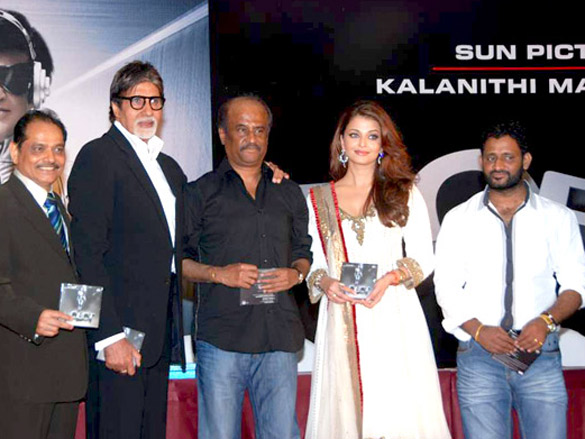
At the Jailer audio launch, Rajini recalled hearing stories after Annaatthe that kept taking him back to Baasha or Annamalai. Nelson’s eventual answer in 2023 was a retired prison officer whose family knows him as a grandfather. Ramya Krishnan, once the woman who could not bear to see him married to someone else, now played his wife. The casting carries a little joke for anyone who remembers Neelambari. Nelson has no need to explain it, and Muthuvel Pandian’s family is better off without the explanation.
CinemaRumble’s original review of Jailer called that film a comeback too. Put it beside the site’s report on Jailer’s theatrical run, and the difference from 2005 comes into focus. Saravanan was a familiar star unexpectedly sharing a mystery. Tiger Muthuvel works because he has a past the people around him underestimate. Age itself is part of the dramatic trick. Nobody has to pretend this grandfather has just arrived from the world of Padayappa.
Where to revisit the films and songs
For the Tamil film itself, AP International has a Chandramukhi full-movie upload on YouTube. The 2005 title also has official JioTV and Prime Video listings; playback depends on region and subscription. For just the music, try the official soundtrack jukebox and put ‘Devuda Devuda’ next to ‘Raa Raa’. They sound like promises made to different audiences. The film kept both.
Padayappa is a different case. Its Prime Video catalogue page showed the film as unavailable when checked; a listing isn’t a working stream. The authorized retrospective above is the better stop for the making of the film, especially for anyone returning to it after the December 2025 theatrical re-release.
Why this comeback still belongs to Chandramukhi
The easiest ending to imagine in 1999 is Rajini sitting down on that swing. A rival has prepared an indignity for him; in a few seconds, he turns it into a demonstration of precisely who he is. It would be a fine last image for a star. It would also leave out one of his most useful gifts: his ability to be the person in a scene who notices what another actor is doing.
That’s the pleasure of Saravanan that no collection figure preserves. He can make a fool of Vadivelu, be a friend to Prabhu, turn on the old style, and then give his full attention to Ganga. Jyothika gives him something worth looking at. Vasu understood that the audience would look where Rajini looked, even if that meant spending the crucial minutes of a Rajinikanth comeback watching somebody else. Padayappa gave him the last word. Chandramukhi found him a reason to listen.